A tattoo apprenticeship is the only legitimate path into professional tattooing. No online course, kit-build tutorial, or YouTube series gets you there — tattooing is permanent body modification requiring hands-on mentorship, and the industry enforces this standard fiercely. Most reputable studios won’t hire an artist who didn’t apprentice traditionally, and clients are increasingly savvy about checking credentials.
This guide covers everything you actually need to know: what shops look for before they’ll even take your portfolio, how the training unfolds month by month, what costs are fair versus exploitative, UK licensing requirements, and what to do the moment your apprenticeship ends.
Is a Tattoo Apprenticeship Right for You?
Before approaching a single shop, be honest with yourself about three things.
Can you commit 2+ years to low or no income? Apprenticeships in the UK typically run 18 months to 3 years. For most of that time you won’t be earning from tattooing. You need a realistic plan to cover rent, food, and supplies — a part-time job, savings, or a partner’s income.
Are your drawing skills genuinely strong? “I’m artistic” isn’t enough. Shops expect applicants who can draw confidently across multiple styles — portraiture, line work, geometric, traditional flash. Your portfolio is your entire case for being taken on. If you can’t fill 20 strong pages right now, keep drawing before you apply.
Are you ready to be at the bottom of the hierarchy? For months you will clean stations, sterilise equipment, make tea, and watch others tattoo. The artists who thrive in apprenticeships are those who genuinely enjoy being in the shop environment and treat every task — including the unglamorous ones — as part of their education.
If your answer to all three is yes, read on.
What You Need Before You Apply
A Portfolio That’s Actually Ready
Your portfolio is the only thing that gets you in the door. Shops see dozens of enquiries from people who “love tattoos” — your drawings are what separates you from everyone else.
What a strong apprenticeship portfolio looks like:
- 20–30 pieces minimum, showing a range of styles and subjects
- Line work samples: clean, confident lines are the first thing a tattooist checks
- Black and grey shading: demonstrates tonal control
- Colour work: at least a few pieces showing you understand how colours interact
- Original designs alongside reference-based work: shows you can create, not just copy
- Neatness and presentation: a battered sketchbook reads as careless; a clean portfolio book or printed work signals professionalism
Avoid:
- Digital-only work (it’s fine to include, but hand-drawn work is essential)
- Heavily filtered or edited photos of your work
- Rushed pieces drawn specifically for the portfolio — artists can tell
Spend as long as it takes to build a portfolio you’re genuinely proud of. Six months of focused drawing is not unusual before someone is portfolio-ready.
Background Knowledge Worth Having
Arriving with some industry knowledge already in place signals seriousness and shortens your training curve.
Bloodborne pathogens certification (Level 2 Award in Awareness of First Aid for Mental Health is less relevant here — specifically the QA Level 2 Award in Infection Prevention and Control, or equivalent). Several providers offer this online or as a day course for under £100. Having it before you apply shows initiative and means one less thing your mentor has to teach from scratch.
Basic first aid certificate: Not universally required to apply, but a Green Cross Code-style first aid course is straightforward, cheap, and looks good.
Familiarity with your local council’s tattooing registration requirements: England, Scotland, Wales, and Northern Ireland have slightly different rules. In England, tattoo artists and premises must register with their local authority under the Local Government (Miscellaneous Provisions) Act 1982. Knowing this — and mentioning it — tells a mentor you’ve done your homework.
How to Find the Right Shop
Most people approach this backwards. They Google “tattoo apprenticeship near me”, fire off emails to twenty studios, and wonder why they hear nothing back. The better approach is to find a mentor you’d actually want to learn from — then figure out how to get in front of them.
Criteria for Choosing Where to Apply
Work you respect: If you’re not genuinely impressed by a studio’s output, you won’t be motivated by the training. Find artists whose style you admire and whose work you’d be proud to emulate.
Reputation for safe practice: A shop that cuts corners on sterilisation, cross-contamination protocols, or aftercare instruction is not somewhere you want to learn. Check reviews, visit in person, look at how the studio presents itself.
History of taking apprentices: Ask around. Some studios have graduated 10 artists over the years; others have cycled through apprentices who got nothing useful and left. A shop’s track record as a trainer matters as much as the quality of its tattooing.
Realistic match for your portfolio: Applying to the busiest, most prestigious studio in your city when your portfolio is still developing is likely to get you rejected. Start with studios whose output is a stretch goal, not an impossible target.
Where to Actually Look
- Walk in and observe: The best research is visiting studios as a customer or potential customer. You learn the culture of the shop, the attitude of the artists, and whether you could see yourself there every day.
- Instagram: Most working tattooists post regularly. Follow local artists, study their work over time, and engage genuinely with their content before you approach them.
- Tattoo conventions: The International Tattoo Convention (London), the Brighton Tattoo Convention, the Great British Tattoo Show — these are places where working artists gather. Conversations happen naturally, and you can introduce yourself without the formality of a cold approach.
- Local community boards and Facebook groups: Some artists post that they’re accepting apprenticeship applications. These are worth monitoring.
How to Approach a Shop Correctly
The approach matters as much as the portfolio. Artists receive enquiries from people who have clearly copied a template message, or who walk in at the worst possible moment with no understanding of shop culture. Getting this right significantly improves your chances.
Timing and Method
Don’t walk in on a Saturday afternoon. Shops are busiest at weekends; artists are with clients, the front desk is handling walk-ins. This is the worst possible time to ask for someone’s attention.
Aim for a quiet weekday, mid-morning or early afternoon. Phone ahead if possible and ask if the owner or a senior artist has five minutes to meet a prospective apprentice. This courtesy alone puts you ahead of most applicants.
In-person is almost always better than email. Emails are easy to ignore. Walking in — professionally, confidently, at the right time — is harder to dismiss and gives you a chance to make an impression.
What to Say
Keep it short and direct. Something like: “I’m working towards a tattoo apprenticeship and I really admire the work that comes out of this studio. I have my portfolio here and I’d love to show it to someone when there’s a good moment — or if you could let me know when might be better.”
You’re not asking for a job on the spot. You’re asking for a few minutes of someone’s time and leaving the door open for follow-up.
What to Bring
- Your portfolio (printed or in a clean physical binder — not just your phone)
- A notepad and pen
- Contact details you can leave behind
Following Up
If they take your details and say they’ll be in touch — follow up once after a week if you haven’t heard. A short, polite message is fine. Sending multiple follow-ups or showing up repeatedly will irritate people.
If they say no, ask if they know any shops that are currently looking. The tattoo industry is a small world; a recommendation from one artist to another is worth more than a cold approach.
What a Tattoo Apprenticeship Costs in the UK
This is the area where people get confused, misled, or outright scammed. Here’s the honest picture.
Paid Apprenticeships
Paid tattoo apprenticeships exist in the UK but are uncommon, particularly in the early stages. Some larger studios with structured training programmes pay a small wage — often minimum wage or just above — from the start. These are competitive and hard to land.
Unpaid Apprenticeships
The majority of UK tattoo apprenticeships are unpaid, at least initially. You provide your labour (cleaning, front desk, studio support) in exchange for mentorship and training. As you begin tattooing clients — typically in the second year — you’ll start earning commission on the work you do (commonly 30–50% of the tattoo cost, with the shop taking the remainder).
Is unpaid legal? The legal position in the UK is nuanced. If you’re classed as a “worker” for employment law purposes, your employer would be required to pay at least National Minimum Wage. However, many apprenticeships operate informally or are structured as training agreements rather than employment contracts. If you’re ever unsure about your rights, Citizens Advice or the ACAS helpline can clarify your specific situation.
Apprenticeship Fees
Some studios charge a fee for training, typically ranging from £1,500 to £8,000 in the UK. Whether this is acceptable depends entirely on what’s delivered:
Legitimate fees might cover: structured curriculum, materials (practice skin, needles, ink, machines), dedicated teaching time, and business mentorship.
Red flags on fees: Studios that charge £3,000+ upfront but provide little more than a room to practice in are not worth the money. Always ask what you get for the fee — in writing.
A common piece of advice in the industry: if you’re paying a fee, get a detailed training agreement signed before any money changes hands, outlining exactly what training you’ll receive, the expected timeline, and what happens if either party doesn’t hold up their end.
Other Costs to Budget For
Even in a free apprenticeship, expect to spend:
- Certification costs: Bloodborne pathogens, first aid — around £100–£200
- Art supplies: Drawing materials, sketchbooks — ongoing
- Practice materials: Fake skin, needles, ink for practice — £200–£500 to get set up
- Your own machine (eventually): A decent professional rotary machine costs £200–£600+
- Transport: If the shop isn’t local to you
The Apprenticeship Phase by Phase
Phase 1: Shop Duties and Observation (Months 1–3)
You will not touch a tattoo machine on human skin for at least the first few months. This phase is about earning trust, demonstrating reliability, and absorbing everything you can through observation.
Your daily tasks will include:
- Cleaning: Everything. Stations, floors, sinks, the toilet. Without complaint.
- Sterilisation and setup: Learning the autoclave, understanding cross-contamination zones, setting up stations correctly before your mentor tattoos
- Reception duties: Answering phones, greeting clients, taking bookings, handling deposits
- Watching every tattoo: Stand behind your mentor and pay attention. Ask questions when there’s a quiet moment, not while they’re working on a client
The purpose of this phase isn’t just to save the shop on cleaning costs. It’s to immerse you completely in the environment, teach you how a professional studio actually runs, and observe your character before anything is invested in your technical training.
What separates good apprentices here: Showing up every single day on time without being asked, doing tasks without needing reminding, and demonstrating that they’re genuinely engaged even when nothing exciting is happening.
Phase 2: Drawing and Practice Skin (Months 3–9)
Once you’ve proven your commitment, technical training begins — but not on real people yet.
Drawing practice intensifies: You’ll be assigned exercises by your mentor — reproduce specific flash sheets, practise particular techniques, draw studies of anatomy. This isn’t optional extra work; it’s the core curriculum.
Machine handling on fake skin: Practice skin (synthetic or pig skin) is where you learn to hold a machine, work at the right depth, control line weight, and develop the physical muscle memory that tattooing requires. You’ll make hundreds of mistakes here. That’s the point.
Stencil work: Applying stencils accurately and in the right position relative to the body part is a skill in itself. You’ll practice this until it’s reliable.
Machine maintenance: Understanding how your machine works — tension, needle depth, voltage settings — is essential. You should be able to strip and reassemble a machine and identify what’s causing common problems.
This phase typically overlaps with Phase 1; you’re still doing shop duties while adding technical practice.
Phase 3: First Real Tattoos (Months 8–18)
The transition to tattooing real people is a significant milestone, but it happens gradually.
First subjects are typically volunteers from within the industry: Other apprentices, willing friends of the shop, artists looking for free tattoos. This is common practice — it means your first clients understand what they’re signing up for.
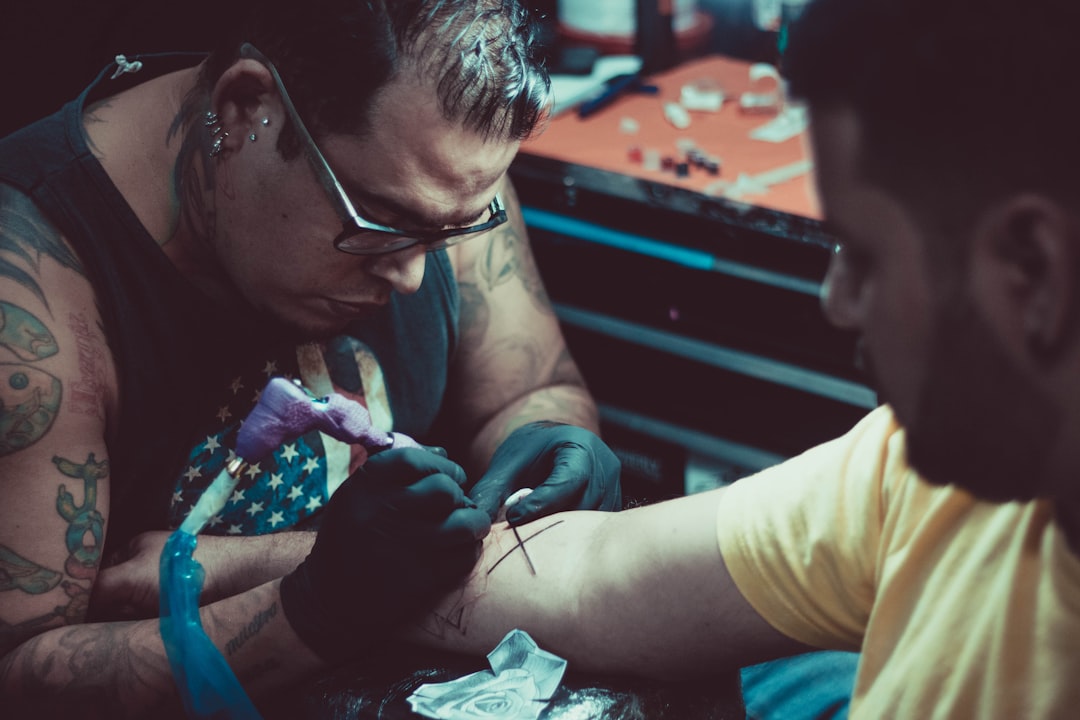
Your mentor watches everything: In early supervised tattooing, your mentor may correct your hand position, adjust your angle, or step in if something is going wrong. This direct feedback is the most valuable part of the entire apprenticeship.
Start simple: First pieces will be small, simple — a single line tattoo, a small geometric shape, simple lettering. You build complexity as your confidence and technique develop.
Document everything: Photograph every piece you complete. Your portfolio grows here.
Phase 4: Building Independence (Months 15–24+)
As your work improves and your mentor trusts your judgement, supervision becomes lighter. You’ll:
- Handle your own consultations with clients
- Price your work
- Book your own appointments
- Take on more complex and larger pieces
- Begin to develop your own aesthetic
By the end of this phase, you should be able to complete a full session — from client consultation to final wrap — without needing to refer to your mentor for guidance.
UK Licensing and Registration Requirements
Unlike some countries, the UK does not have a single national tattoo licence. Requirements are managed at the local authority level, but here are the consistent standards you need to meet across England, Scotland, and Wales.
Local Authority Registration
In England and Wales under the Local Government (Miscellaneous Provisions) Act 1982, anyone carrying on the business of tattooing — including premises — must register with their local council. Your mentor’s studio will already be registered, but when you begin tattooing clients independently, you’ll need your own registration (typically a few hundred pounds per year, varying by council).
Scotland has its own licensing provisions. Check with your local council for specifics if you’re based in Scotland.
Bloodborne Pathogen Certification
This is the most important certificate you’ll need. Look for a QA Level 2 Award in Infection Prevention and Control (or equivalent). This covers:
- How bloodborne pathogens are transmitted
- Safe handling of sharps
- Sterilisation and cross-contamination prevention
- Personal protective equipment
Several providers run these as one-day courses or as online learning. Cost typically ranges from £50–£150. Most studios require this before you touch a machine.
First Aid
A basic First Aid at Work certificate (one or three-day course) is widely expected. The Health and Safety (First-Aid) Regulations 1981 require employers to make first aid provision; if you’re working in a studio, either you or the studio should hold a valid certificate.
Insurance
Once you’re tattooing clients independently, you need public liability and professional indemnity insurance. Specialist tattoo artist insurance is available from providers like Tattoo Artist UK Insurance or through broader self-employed tradesperson policies. Budget around £150–£350 per year.
What Great Apprentices Do (That Mediocre Ones Don’t)
After years in the industry, experienced mentors consistently distinguish between apprentices who make it and those who don’t. The difference is rarely raw talent.
They practice outside shop hours. Two hours of daily drawing practice at home compounds over months into a significant technical advantage over someone who only practises when told to.
They study the work they admire obsessively. Not to copy, but to understand why it works — composition, placement, use of negative space, line weight variation.
They ask good questions at the right time. “Can I ask you something about the way you handled that shading when the client leaves?” is excellent. Interrupting a consultation to ask about technique is not.
They treat every client interaction as a learning opportunity. Watching how your mentor handles a nervous client, manages an unexpected reaction, or diplomatically redirects a design that won’t translate well to skin is as valuable as the technical teaching.
They stay off their phone during shop hours. This sounds obvious. It isn’t, apparently.
Red Flags: Walk Away From These
Charging a large upfront fee with no written training agreement. Money should follow value delivered, not precede a vague promise.
No emphasis on sterilisation and cross-contamination from day one. If a studio’s first priority isn’t safety, nothing else they teach is worth having.
Rushing you onto real clients before you’re ready. Free tattoos are a draw for some studios. A mentor who pushes you onto paying clients too early is prioritising revenue over your development and client safety.
High apprentice turnover. Ask how many apprentices they’ve trained and whether you can speak to any graduates. Mentors with a genuine track record are proud to put you in touch.
Isolation from the wider industry. Some mentors actively discourage apprentices from attending conventions, following other artists, or building their own network. A good mentor wants you to grow; an insecure one wants you dependent.
Vague timelines. If a mentor can’t give you a rough framework for when you’ll progress from each phase, that’s a warning sign.
After Your Apprenticeship: The Three Paths
Completing your apprenticeship isn’t the end — it’s the beginning of building a career. Most artists follow one of three paths.
Stay at Your Mentor’s Shop
Many artists spend 1–3 years post-apprenticeship in the shop where they trained. You know the clients, you know the team, and you have an established base. If the relationship is good and the shop fits your style, this is a solid option. Negotiate a new commission split to reflect your qualified status.
Join Another Studio
Moving to a new studio exposes you to different approaches, clientele, and working cultures. Some artists do this deliberately — spending a year or two in several studios before settling. It broadens your perspective and can accelerate your development faster than staying in one environment.
Work as a Guest Artist or Go Independent
Guest tattooing — spending a week or two at different studios — is common among artists with an established following. It gives you flexibility and exposure without the commitment of a permanent position. Going fully independent (renting your own chair or opening a studio) requires a solid client base, business infrastructure, and financial planning.
Running Your Tattoo Business: The Practical Side
Once you’re tattooing independently — whether at a studio, as a guest, or in your own space — the administrative side of your business demands as much attention as the artistry. The artists who struggle aren’t usually struggling with technique; they’re struggling with no-shows, deposit disputes, missing consent forms, and the chaos of managing bookings through Instagram DMs.
A purpose-built system handles the operational side so you can focus on the work:
- Online booking: clients book when it suits them, not just during your shop hours
- Automated deposit collection: remove the awkward “can I take a deposit?” conversation
- Digital consent forms: sent in advance, signed before the client arrives
- Client records: skin type notes, previous work, contact details, all in one place
- Automated reminders: significant reduction in no-shows without manual chasing
MyTattoo.Software is built for exactly this — used by independent artists and studios to replace the DMs, PDFs, and spreadsheets that eat up time better spent tattooing. Start a free 14-day trial when you’re ready to run your bookings professionally.
Frequently Asked Questions
How long does a tattoo apprenticeship take in the UK?
Most UK tattoo apprenticeships last between 18 months and 3 years. The variance comes down to how much time you can dedicate, how quickly your skills develop, and your mentor’s teaching style. Some structured programmes have clear graduation criteria; others are more fluid. A realistic expectation for most people is around 2 years before tattooing independently with confidence.
Do tattoo apprenticeships pay in the UK?
Most UK tattoo apprenticeships are unpaid, at least in the first year. As you begin tattooing clients — typically in the second year — you’ll typically earn 30–50% of your tattoo revenue, with the studio keeping the remainder. Some larger studios do offer paid apprenticeships, but these are competitive. Budget for at least a year with no tattooing income.
How much does a tattoo apprenticeship cost in the UK?
Some apprenticeships are free; some charge fees ranging from £1,500 to £8,000. A fee isn’t inherently a red flag — structured training with materials, dedicated teaching time, and a clear curriculum can justify a cost. What matters is getting the details in writing: what training is included, what the timeline is, and what happens if either party doesn’t deliver.
Do I need a licence to tattoo in the UK?
You need to register with your local authority before tattooing clients independently. In England and Wales, this is under the Local Government (Miscellaneous Provisions) Act 1982. Scotland has separate provisions. You’ll also need bloodborne pathogen certification, first aid training, and public liability insurance.
Can I learn to tattoo without an apprenticeship?
Technically, there’s nothing legally preventing someone from buying equipment and tattooing without an apprenticeship. In practice, self-taught “scratchers” are widely viewed negatively by the professional industry, often have poorer technique, and face difficulties getting work at reputable studios. More critically, inadequate training in sterilisation and bloodborne pathogen prevention poses genuine health risks to clients. The apprenticeship system exists for good reasons.
How do I build a portfolio for a tattoo apprenticeship?
Focus on 20–30 strong pieces demonstrating range: confident line work, black-and-grey shading, colour work, and original designs alongside reference-based work. Hand-drawn work is essential, even if you also include digital pieces. Quality matters more than quantity — better to show 20 strong pieces than 40 average ones.
What should I look for in a tattoo mentor?
Look for an artist whose work you genuinely respect, a studio with a reputation for safe practice, and a mentor with a track record of training apprentices to completion. Ask how many apprentices they’ve graduated and whether you can speak to any of them. The working relationship with your mentor will define your entire early career — choose carefully.
How do I approach a tattoo shop for an apprenticeship?
Visit in person during quiet hours (mid-week, mid-morning) rather than emailing cold. Be direct: you’re looking for an apprenticeship, you admire their work, and you’d like to show your portfolio when there’s a good moment. Bring a physical portfolio. Don’t show up at the weekend during busy periods. If they’re not taking apprentices, ask if they know anyone who is — the industry is smaller than it looks.
Can I do a tattoo apprenticeship part-time?
Some shops accept part-time apprentices, though full-time is strongly preferred. Part-time significantly extends the timeline and can frustrate mentors who need someone consistently available. If part-time is your only option, be upfront about this from the start and understand it may narrow your options.
What happens after a tattoo apprenticeship?
Most artists either stay at their mentor’s shop for a year or two post-graduation, move to a new studio for fresh experience, or begin guest tattooing. Going fully independent — your own chair or studio — typically comes after building a solid client following, usually 3–5 years into a career.
Running a Tattoo Studio?
If you manage a studio, the right software saves hours every week:
- Tattoo Studio Software — bookings, client history, staff management
- Tattoo Booking Software — online booking your clients can use 24/7
- Tattoo Scheduling Software — smart appointment and waitlist management
- Tattoo Booking App — mobile-first booking for on-the-go artists
- Tattoo Artist Software — purpose-built tools for independent artists
Related reading: How to Become a Tattoo Artist | Piercing Apprenticeship Guide | How Much Do Tattoo Artists Make?